Find the spy chip before it goes live.
BoardSafe checks circuit boards for hidden implants, counterfeit parts and altered firmware, then seals each device with a serial-numbered tamper-evident seal. Built for government, defence and critical infrastructure, and run on your own site.
You can't see a tampered board from the outside.
A router, switch or controller can pass every test you run on it and still carry something it shouldn't. An extra chip can be added to a board at the factory, in a warehouse, in transit, or by someone with a screwdriver and ten minutes alone in a comms room. A part can be swapped for a cheaper or fake one. Firmware can be changed so the device quietly answers to someone else.
None of that shows on the outside of the case. A typical goods-in check confirms that hardware arrived, powers on and matches the purchase order. It rarely opens the case and compares the board with the design it was built from.
Hardware sits under everything else you protect: the network, the control system, the encryption, the logs. If the board can't be trusted, nothing running on it can be either. BoardSafe closes that gap with a fast check of the board itself, a seal that shows if the case is opened later, and regular checks for as long as the device is in service.
New to the topic? Start with our guide to hardware supply chain security in Australia, or ASD's guidance on cyber supply chain risk management.
Three ways a board can lie to you.
BoardSafe looks for the three kinds of tampering that matter most on network and control hardware, in one pass.
Hidden implants
Parts that aren't in the design at all: an extra chip, a tiny add-on board, or any component that should not be there. A single extra part is enough to be flagged.
Counterfeit parts
Components that are fake, or have been swapped for something other than what the design calls for. Fake parts can fail early, run out of spec, or hide changed behaviour.
Altered firmware
Firmware that has been changed from what the vendor shipped. BoardSafe checks what is actually on the device against a known good version, so a quiet change doesn't slip through.
Design files in. Answer in under a minute.
The check is simple to run and hard to fool, because it doesn't trust what the device says about itself. It compares the physical board with the design it was meant to match.
Load the design
BoardSafe starts from the board's original design files: the parts and layout it was built from. They stay on your site.
Scan the board
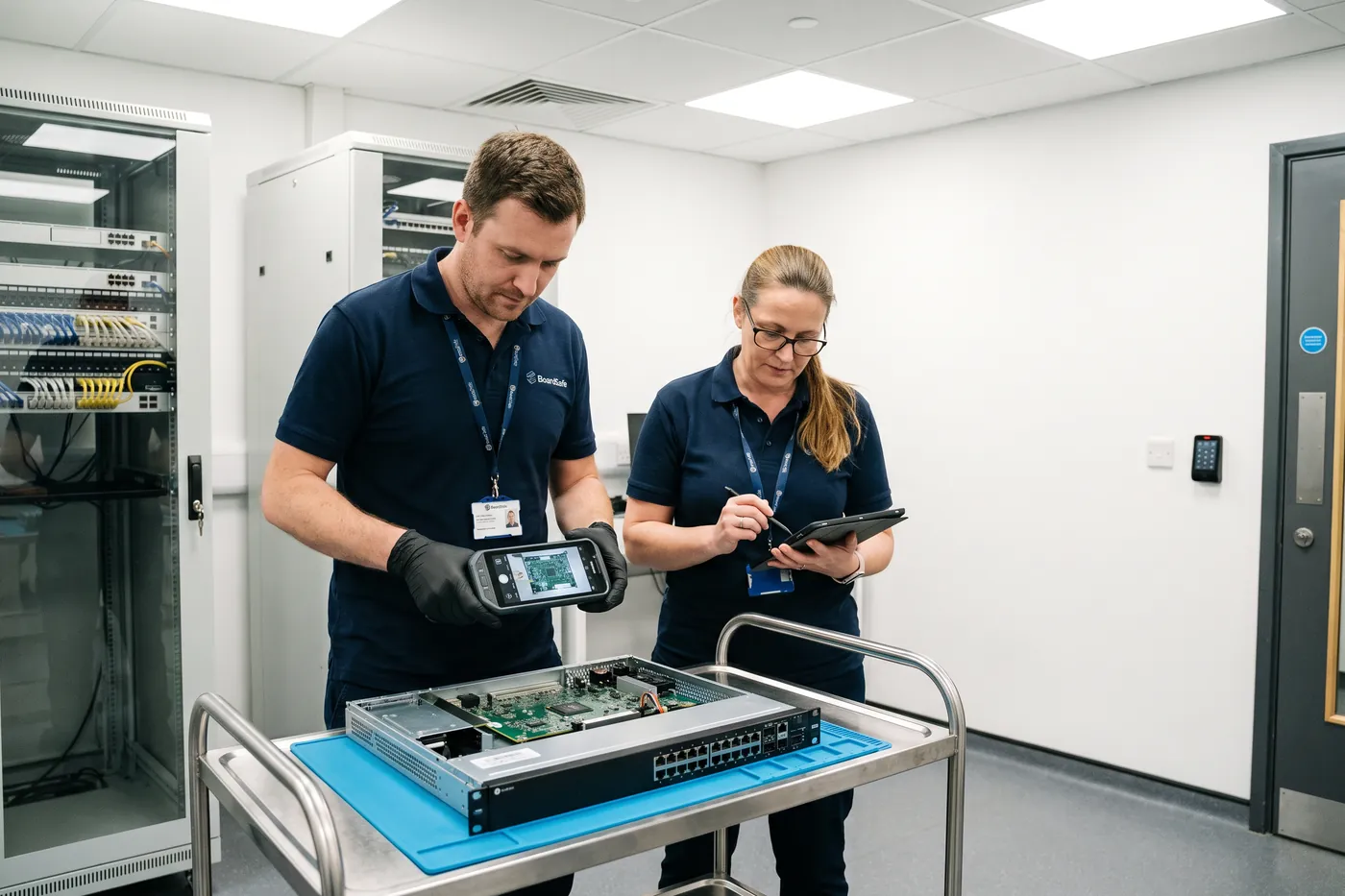
The opened board is scanned and every part is compared with what the design says should be there.
Flag the parts
Anything fake, swapped, or not in the design at all is flagged, down to a single extra chip.
Check the firmware
The firmware on the device is checked against a known good version from a trusted source.
Every unit, not a sample
Finding one swapped chip used to mean sending a board to a lab and waiting weeks for an answer. That pushes most organisations to check a small sample and hope the rest match. BoardSafe takes under 60 seconds a board, which makes it practical to check every unit on the bench as it arrives or before it ships.
Measured, not promised
In internal testing, BoardSafe found 97% of the faults planted on boards. Because the scan works from your own design files, each result is a direct answer to one question: does this board match what it is supposed to be? A trial on your own hardware is the best way to see how that holds up on the boards you care about.
Then it's sealed.
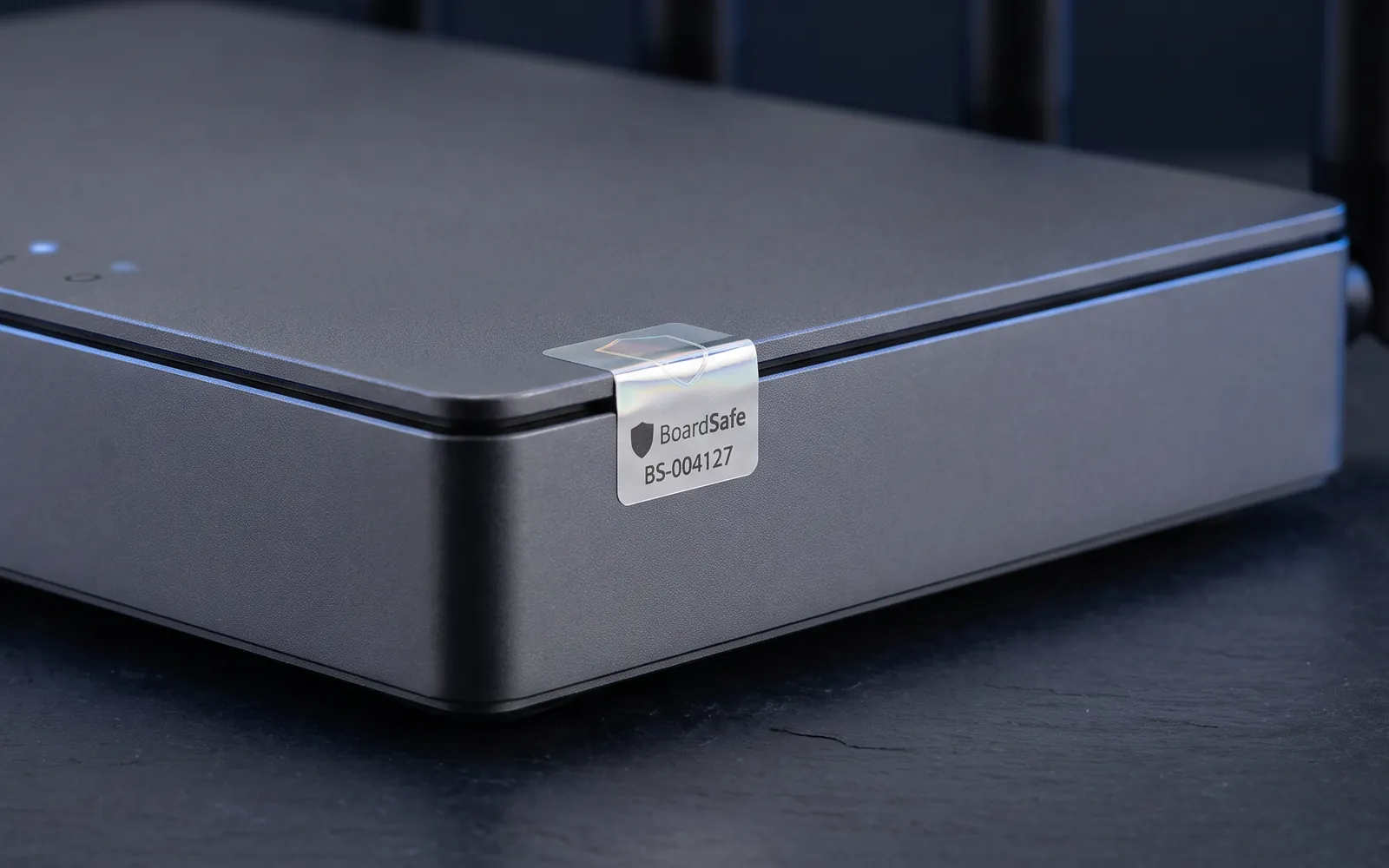
Once a device passes, a small BoardSafe tamper-evident seal goes across the join of its case. It is small and discreet, and sits where the two halves of the case meet, so the case can't be opened without disturbing it.
Each seal has its own serial number, so a device can be matched to its seal on every later check. Anyone who opens the case after that, including someone on the inside, has to break the seal to do it. A broken, missing or wrong seal is visible at a glance during a walk-through or an audit.
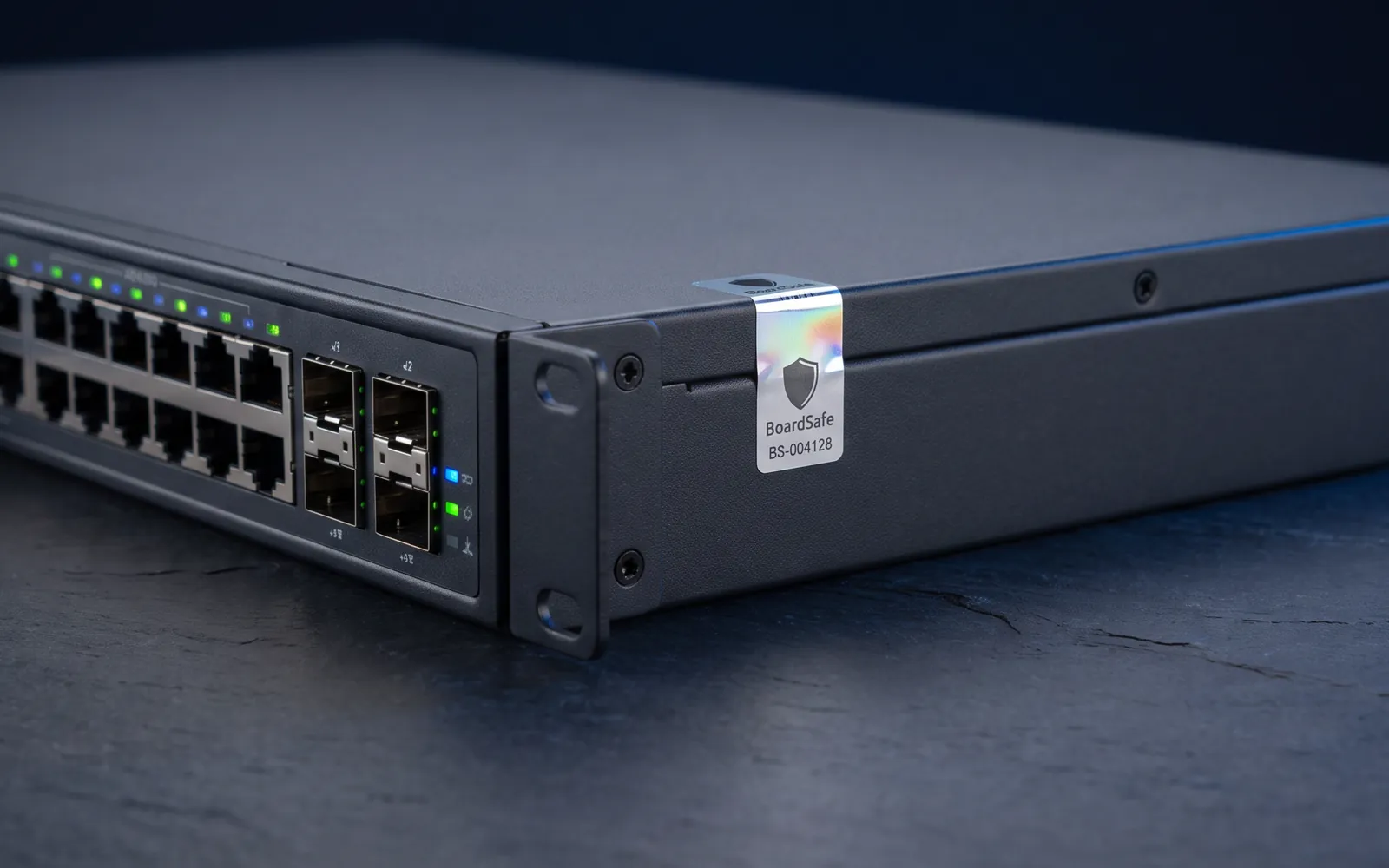
- Fitted only after a device passes its scan
- Unique serial number on every seal
- Placed across the case join, where opening the case breaks it
- Checked again at every audit and on-site visit
A seal on its own shows tampering; it doesn't stop a skilled and determined attacker. That's why BoardSafe only seals a device after the board and firmware have been checked, and why seals are checked again for as long as the device is in service. Read more in our guide to tamper-evident seals for IT and OT equipment.
On your bench, not in someone else's lab.
A board's design files are some of the most sensitive files a manufacturer or operator holds. Sending them out for testing, along with the boards themselves, creates a new chain-of-custody problem: more people, more places, more transport, and more time when the hardware isn't under your control.
BoardSafe runs on your site. Your design files stay with you and the inspection infrastructure stays on your premises. Nothing is sent out to check a board. That suits secure facilities, classified environments and any team that would rather not explain to an auditor why its board layouts went to a third party.
It also means checks happen where the hardware already is: at goods-in, on the integration bench, in the comms room or beside the control cabinet.
Trust the people and tools that check your hardware.
Letting anyone open your network and control hardware is a risk in itself. This is how BoardSafe keeps that risk small. The full detail is in Vedametric's published AI safety and security framework, including incident notification within 12 hours.
In-house AI, nothing shared
BoardSafe runs Vedametric's own proprietary models. No data is sent to any other AI model, outside system or third-party staff. Everything stays in house.
Vetted people on your site
All BoardSafe staff hold security clearances and undergo mandatory police checks and mandatory substance testing.
A record for every device
Every inspection is recorded against the individual device, for security and audit logging.
What about the warranty?
It depends on the device type, but in most cases the warranty is unaffected, because BoardSafe does not tamper with original components. Ask us about your specific hardware before a trial.
Which devices are supported?
BoardSafe works with hardware vendors directly, and the list of supported products and devices keeps growing. Send us the models you run and we will confirm which are covered.
Checked when it ships. Checked every year after.
For hardware shipped into and deployed in critical infrastructure, defence and other security-critical sites, BoardSafe is part of a rollout plan that keeps checking long after the first scan.
Shipments and deployments
Covers hardware shipped into, and deployed in, critical infrastructure, defence and security-critical sites, from goods-in to installation.
Yearly audits
Our team audits your critical hardware infrastructure and its maintenance plans every year, so the record stays current as equipment is repaired, replaced and moved.
On-site visits
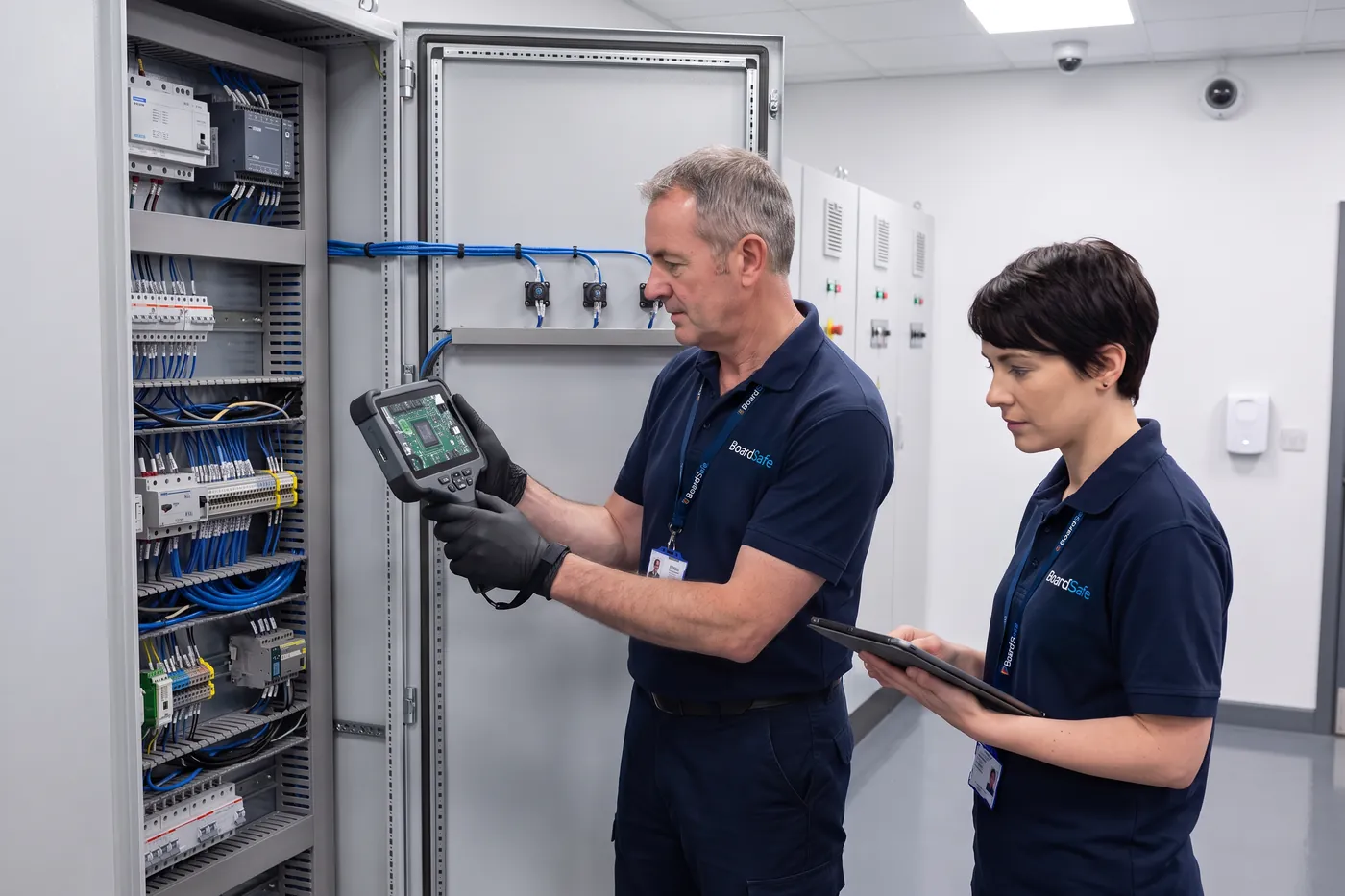
BoardSafe engineers visit your sites for compliance checks and to verify the integrity of critical hardware where it is installed.
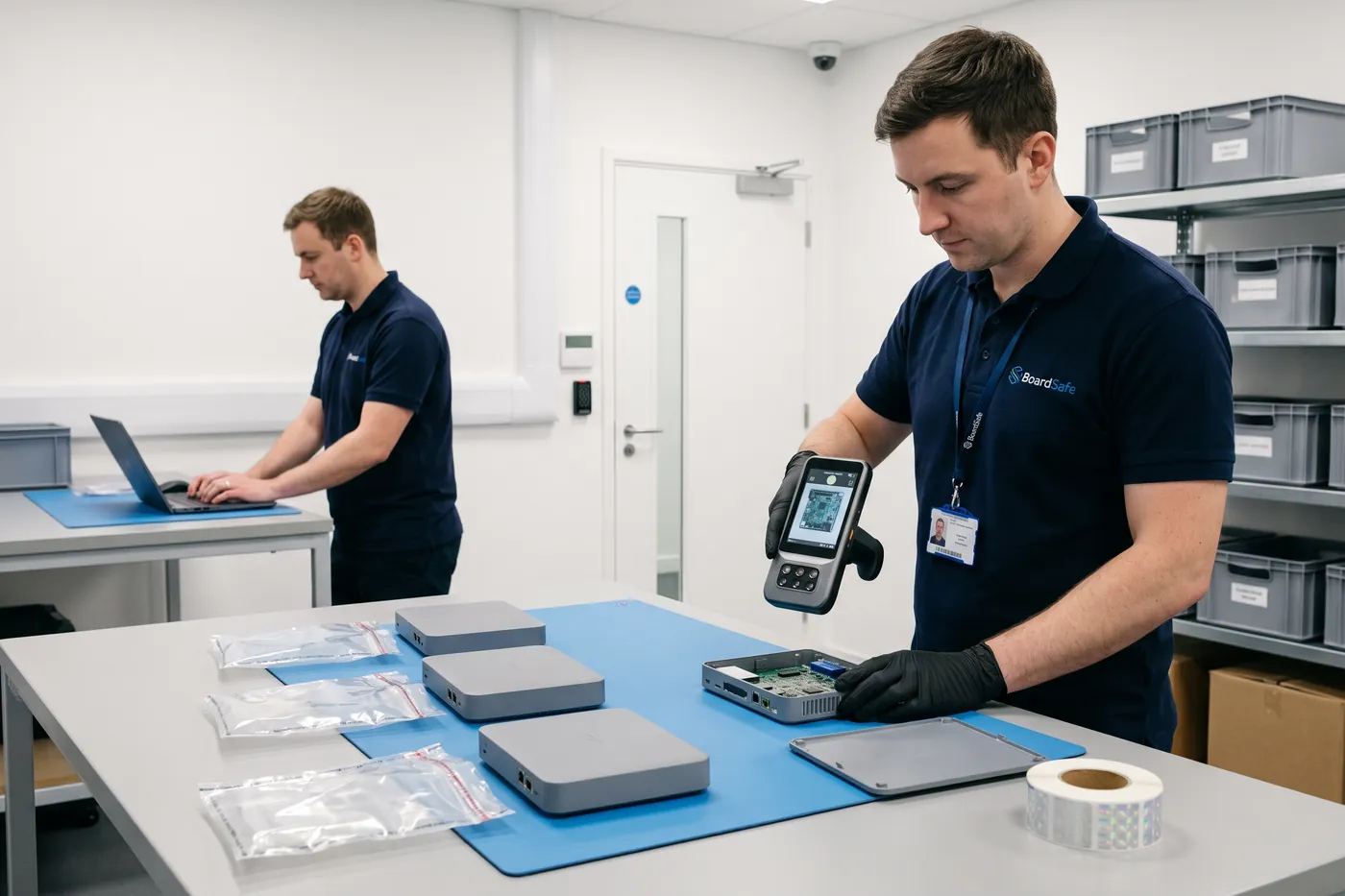
Why the checking doesn't stop at delivery
Hardware is most exposed when people have a reason to open it: repairs, upgrades, swaps under warranty, and routine maintenance. Each of those is a chance for a part to change. Yearly audits and on-site visits catch a broken seal or a changed board before it becomes a long-term problem, and they keep the record of what is installed honest.
Evidence you can show
Many operators of critical infrastructure assets must manage supply chain hazards under a critical infrastructure risk management program, as the Cyber and Infrastructure Security Centre explains. BoardSafe does not make anyone compliant on its own, but scan results, seal serials and audit records are the kind of evidence a program can draw on. See our guide to the SOCI Act and supply chain hazards.
Where BoardSafe fits your obligations.
BoardSafe is not a certification. It produces the checks and records that these frameworks ask for, so your own program has evidence behind it.
| Framework | What it asks for | How BoardSafe helps |
|---|---|---|
| ASD Information Security Manual (ISM-1790, 1791, 1792) | Equipment is delivered in a way that keeps its integrity, and integrity and authenticity are assessed as part of accepting it. | Board and firmware checks at goods-in, before hardware is accepted, with a record for each device. |
| SOCI Act CIRMP Rules | Critical infrastructure risk management programs must address supply chain hazards, including malicious people inside and outside the supply chain. | Checks for tampered and counterfeit hardware, seals that show later tampering, and yearly audits to show the hazard is managed. |
| NIST SP 800-193 | Platform firmware should be protected, and changes from an authorised state detected and recovered from. | Firmware on each device is checked against a known good version, so unauthorised changes are detected. |
Read more in our guides to hardware supply chain security, the SOCI Act and firmware integrity.
From the loading dock to the yearly audit.
Every site is different. This is how BoardSafe usually fits around hardware that matters.
- Goods-in. New routers, switches, controllers and servers are opened and scanned on arrival, before they reach a rack or a cabinet.
- Seal. Each device that passes gets a serial-numbered BoardSafe seal across its case join. Anything flagged is held back.
- Deploy. Sealed devices go into service. Staff know what an intact seal looks like and who to call if one is broken.
- Walk-throughs. Seals are easy to check during the site rounds your team already does.
- After maintenance. When a device has to be opened for repair, it is scanned again and resealed with a new serial.
- Yearly audit. BoardSafe audits critical hardware and maintenance plans every year and visits sites to verify hardware integrity in place.
For hardware that can't be allowed to fail quietly.
After successful trials with two Australian defence contractors, BoardSafe is now available to government, defence and critical infrastructure customers.
What BoardSafe is not.
BoardSafe is not a certification, an accreditation or a government approval. It does not replace your obligations under the Information Security Manual, the Protective Security Policy Framework, the Defence Industry Security Program or the Security of Critical Infrastructure Act 2018, and it does not replace assurance from your hardware vendors.
What it does is answer a narrow question very quickly: does this board, and the firmware on it, match what it is supposed to be? Then it makes later tampering visible with a seal, and keeps checking with audits and site visits. Because the scan starts from design files, a trial begins with the boards you need to trust and the design files for them.

Founded by Kunal Miind.
BoardSafe is a product of Vedametric, an Australian technology company. Its founder, Kunal Miind, is CTO and Director at Vedametric and an AI engineer whose work spans distilled AI models, embedded systems and PCB design, and secure engineering for government and defence.
That mix is the point of BoardSafe: the AI that reads a circuit board, the hardware knowledge to know what should be on it, and the security background to know why it matters. Read the launch on Vedametric's BoardSafe page, or more about BoardSafe.
Learn the risks before you buy the hardware.
Plain-English guides for security, procurement and engineering teams. Every claim links to its source.
Questions about BoardSafe.
What is BoardSafe?
BoardSafe is a hardware integrity service for government, defence and critical infrastructure. It scans circuit boards against their original design files to find hidden implants, counterfeit or swapped parts, checks firmware against a known good version, fits a serial-numbered tamper-evident seal to each device that passes, and re-checks hardware with yearly audits and on-site visits. It is a Vedametric product.
What is a hardware implant or spy chip?
A hardware implant is a part added to a circuit board, or a part changed on it, so a device does something its owner did not intend, such as leaking data or giving someone remote access. It can be as small as a single extra chip. Our guide on how to detect hardware implants covers the methods in detail.
How long does a BoardSafe scan take?
Under 60 seconds a board. That is fast enough to check every unit as it arrives or before it ships, instead of sending a sample to a lab and waiting weeks for a result.
How accurate is it?
In internal testing, BoardSafe found 97% of the faults planted on boards. Because the scan compares the physical board with your own design files, each result answers a direct question: does this board match its design?
Do our design files or boards leave our site?
No. BoardSafe runs on site. Your design files stay with you and the inspection infrastructure stays on your premises. Nothing is sent out to check a board.
What does the BoardSafe seal do?
After a device passes its scan, a small tamper-evident seal is placed across the join of its case. Each seal has its own serial number. Anyone who opens the case afterwards, including someone on the inside, has to break the seal, so tampering is visible during walk-throughs and audits.
Can BoardSafe check firmware as well as parts?
Yes. One check covers what is on the board and what it is running. The firmware on the device is compared with a known good version, so changed firmware is flagged alongside fake, swapped or extra parts.
What does ongoing assurance include?
For hardware shipped into and deployed in critical infrastructure, defence and security-critical sites, BoardSafe includes yearly audits of your critical hardware infrastructure and its maintenance plans, and on-site visits for compliance checks and hardware integrity verification.
How is BoardSafe priced?
Per device. You can start with the hardware that matters most and add more devices and sites later. Tell us the models you run and roughly how many, and we will quote for them.
Which devices does BoardSafe support?
BoardSafe works with hardware vendors directly, and the list of supported products and devices keeps growing. Send us the models you run and we will confirm which are covered.
Is our data sent to any AI service?
No. BoardSafe runs Vedametric's own proprietary models. No data is sent to any other AI model, outside system or third-party staff. Everything stays in house, and your design files stay on your site. Read Vedametric's AI safety and security framework.
Who will be on our site?
BoardSafe staff only. All of them hold security clearances and undergo mandatory police checks and mandatory substance testing.
Does an inspection void the device warranty?
It depends on the device type, but in most cases the warranty is unaffected, because BoardSafe does not tamper with original components. Every inspection is also recorded against the individual device. Ask us about your specific hardware before a trial.
Who can use BoardSafe?
After successful trials with two Australian defence contractors, BoardSafe is available to government, defence and critical infrastructure customers, including the manufacturers and integrators who supply them.
How do we start a trial?
Use the trial form on this page, email trials@boardsafe.com.au or call (02) 9011 10 10. Tell us the device models, roughly how many units, and where they are installed.
From first email to sealed devices.
Pricing is per device, so you can start with the hardware that matters most and add more later.
- Tell us what you run. Send the device models, roughly how many units, and where they are installed. We confirm which are supported.
- We come to you. Security-cleared BoardSafe staff run the inspection on your site. Your design files and devices stay with you.
- Every device is checked. The board is compared with its design and the firmware with a known good version. Each inspection is recorded against the device.
- You see the results. Devices that pass are sealed with a serial-numbered BoardSafe seal. Anything fake, swapped or not in the design is flagged and held back.
- Decide what's next. Roll out to more devices and sites, and add yearly audits and on-site checks for ongoing assurance.
Bring us a board you need to trust.
Tell us what you build or deploy and where it is installed. We will get back to you about a trial on your site. Trials are open to government, defence and critical infrastructure organisations, and the manufacturers and integrators who supply them.
- Emailtrials@boardsafe.com.au
- Phone(02) 9011 10 10
- OfficeSuite 2, 42 Darlinghurst Road, Potts Point NSW 2011
- CapabilityCapability statement (PDF)